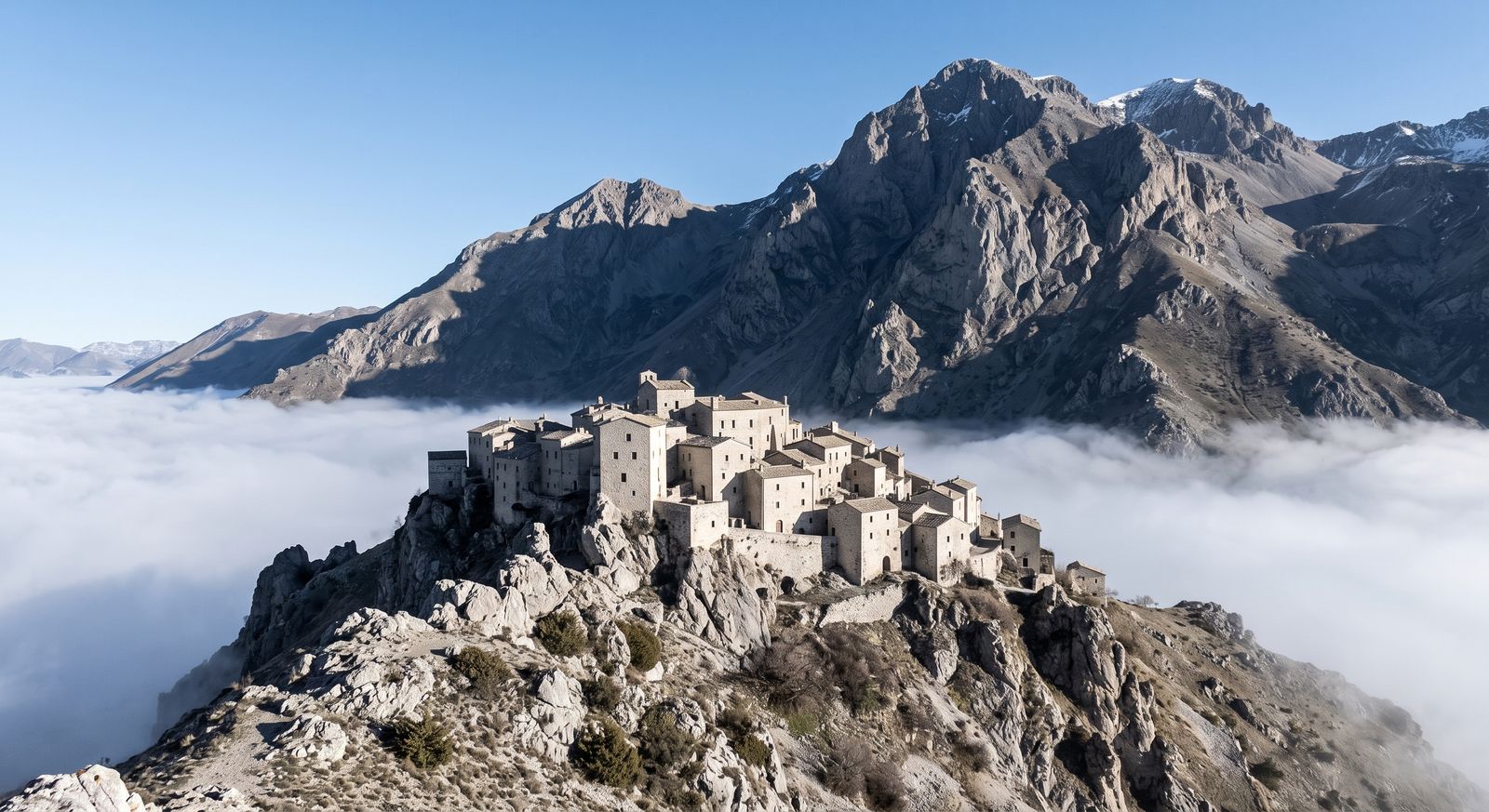
A third of the region is protected land. It holds the southernmost glacier in Europe and one of the last populations of brown bear in western Europe. It is an hour and a half from a city you have already flown to.
The reason nobody goes to Abruzzo is that it is next to somewhere everybody goes. Rome absorbs the entire attention of anyone arriving in central Italy, and the mountains immediately east of it are treated as the drive to somewhere else.
This is a large mistake and a fortunate one. Abruzzo has three national parks, several regional ones, and something in the order of a third of its territory under protection — reportedly the highest proportion in Europe. It has hill towns comparable to anything in Tuscany with a fraction of the people. And it has wild bears.
The bears, since that is why you are still reading
The Marsican brown bear is a distinct population found only in this part of the Apennines. There are very few of them — estimates put the number at somewhere around fifty to sixty animals — which makes them one of the most endangered bear populations anywhere.
They live principally in and around the national park that spans Abruzzo, Lazio and Molise, which was established in the 1920s and is among the oldest in Italy. Wolves are also present, in better numbers, along with chamois and a great many deer and wild boar.
You will probably not see a bear. Fifty animals across a large mountain range is not a wildlife-watching proposition in the way a safari is, and anyone promising otherwise is misrepresenting it. What you will see is habitat, and the knowledge that they are somewhere in it, which changes how the landscape feels in a way that is difficult to explain to people who have not walked in country that holds large animals.
If you do want the best chance, go with a licensed local guide, in the right season, and accept that the answer is usually no.
The three parks, briefly
Abruzzo, Lazio and Molise
The oldest and the wildest in feel. Beech forest, high pasture, and the villages around the edges — Pescasseroli, Civitella Alfedena, Villetta Barrea — that function as bases. This is the bear country and the walking is forest and valley rather than high rock.
Gran Sasso and Monti della Laga
The dramatic one. Corno Grande is the highest peak in the Apennines at a little over 2,900 metres, and on its flank sits the Calderone, the southernmost glacier in Europe — now much reduced and in the process of disappearing, which is a sobering thing to walk up to.
Below it lies Campo Imperatore, a high plateau so large and so bare that it is locally called Little Tibet. It is used for filming, it is grazed by sheep in summer, and in the right light it does not look like Italy at all.
Majella
The most austere. Great rounded limestone massifs, deep valleys, and a long history of hermitages built into the rock by people who came here specifically to be somewhere difficult.
The towns
Two are worth planning around.
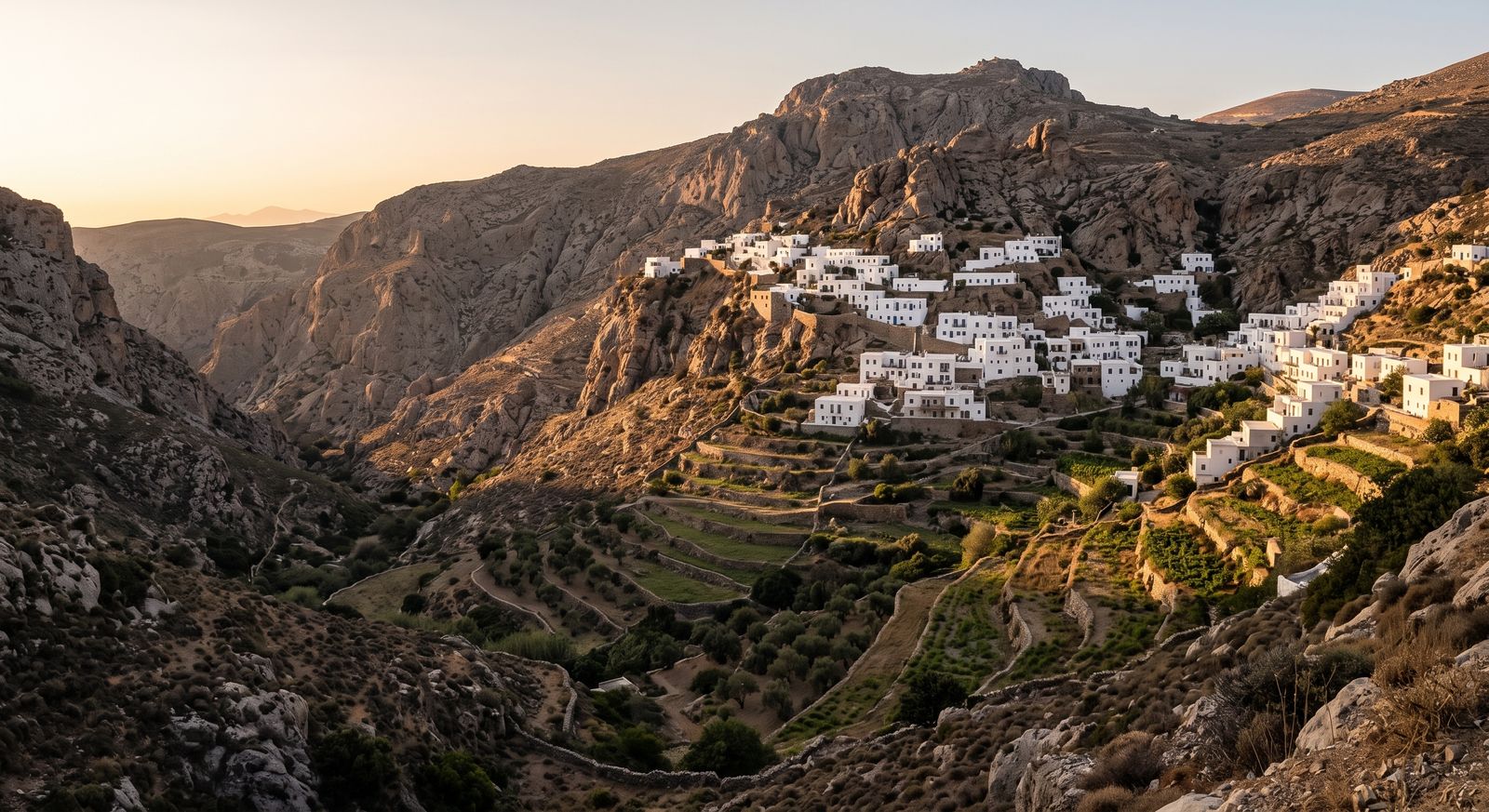
Santo Stefano di Sessanio is a small fortified hill village that was largely abandoned in the twentieth century and has been carefully restored, with accommodation distributed through the existing buildings rather than concentrated in a hotel. It is the most self-consciously beautiful place in the region and it earns it.
Rocca Calascio is a ruined fortress on a ridge above the plateau, among the highest in Italy, reached on foot from the village below. It has been used as a film location often enough that you may recognise it without knowing why. Go at either end of the day; the middle is when the coaches from Rome arrive, and there are more of them than there used to be.
Beyond those, the pleasure of Abruzzo is towns nobody has told you about — Scanno, Sulmona, Pacentro, dozens more — which you find by driving and stopping.
The coast, which is a different holiday
Abruzzo also has an Adriatic coastline, and along part of it stand the trabocchi: timber fishing platforms cantilevered out over the water on spindly legs, built to lower nets without going to sea. Several have been converted into restaurants and eating on one at sunset is a genuinely distinctive thing to do.
It is a strange, good contrast to the mountains, and the two are close enough to combine in a week.
ONE THING TO UNDERSTAND BEFORE YOU BOOK
L’Aquila, the regional capital, was severely damaged by an earthquake in 2009 and reconstruction has taken many years. Parts of the centre have reopened and parts have not.
This is worth knowing rather than avoiding. It is a real and ongoing part of what the region is, and visiting thoughtfully is better than steering around it.
When to go
Late spring and early autumn. May and June bring wildflowers on the high pasture; September and October bring clear air and the beech turning. Summer is hot on the coast and pleasant at altitude. Winter is a ski region — genuinely, and cheaply, though not on the scale of the Alps.
Getting there
Fly to Rome and drive east. The motorway crosses the mountains through long tunnels and the transition from the Roman plain to serious mountain country happens quickly. Ninety minutes to two hours depending on where you are heading.
A car is not optional here. Public transport connects the towns to each other for people who live there, not for visitors moving around the parks.
Staying connected, honestly
Towns and main valleys are fine. The high plateaus and the interior of the parks are not, and that is the normal condition of mountain country rather than a fault.
The specific thing worth planning for here is the driving. Mountain roads in Abruzzo are long, indirect and frequently without signal, and satellite navigation that needs to load will fail exactly where the road forks. Download the offline map for the whole region rather than a corridor, because you will end up somewhere you had not planned to go, which is the correct way to use this region.
And if you are walking in the parks: tell somebody, take a paper map, and treat the phone as an addition to the plan rather than the plan.
A short list for the driving days
The offline map for the whole region, not a corridor. You will end up somewhere you had not planned, which is the correct way to use Abruzzo.
A full tank before you go up. Fuel in the high villages is sparse and closes early.
Layers. The temperature difference between the coast and Campo Imperatore on the same afternoon is startling.
Binoculars, if you have them. You will not see a bear, but you will see chamois and a great deal of birdlife, and the distances are long.
A data connection sorted before you arrive — a travel eSIM or your own roaming terms understood, whichever you prefer. The towns and main valleys have signal, and having it working means the wrong turn on a mountain road is a five-minute problem rather than an hour of it.
Before you go
Late spring and early autumn are the seasons. May and June bring wildflowers to the high pasture; September and October bring clear air and the beech turning on the slopes. Summer is hot on the coast and comfortable at altitude. Winter is a modest and inexpensive ski season, though not on the scale of the Alps.
You will need a car. Public transport connects the towns for the people who live in them, not for visitors moving between three national parks. Fly to Rome, drive east, and allow ninety minutes to two hours depending on where you are heading.
And on the bears, since it is the thing everyone asks: you will almost certainly not see one. Fifty-odd animals across a large mountain range is not a wildlife-watching proposition. Go for the habitat and the knowledge that they are somewhere in it, which changes how the forest feels in a way that is difficult to explain until you have walked in country that holds large animals.